Yucca Roots in Australia: (Everything You Need To Know)
Yucca plants are widely used across Australia for their modern look and drought tolerance. However, what many homeowners don’t realise is that the real problem with yucca is underground.
The yucca root system is aggressive, resilient, and capable of causing ongoing issues long after the visible plant is cut down.
This guide explains how the yucca root system works, how deep yucca roots grow, whether they cause damage, common removal mistakes, and the safest long-term solution for Australian gardens.
What Is the Yucca Root System?
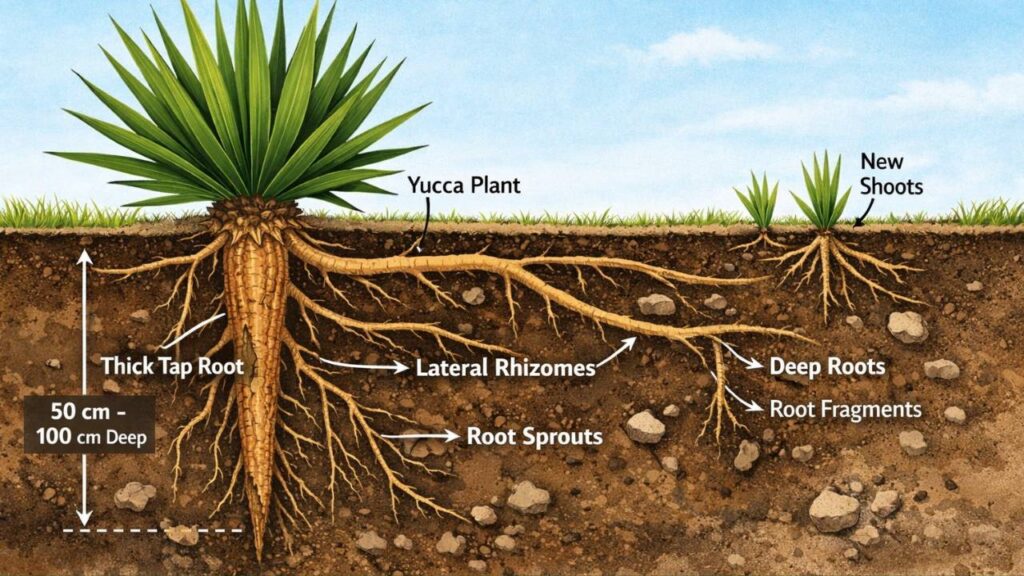
The yucca root system is a combination of thick tap-like roots and spreading rhizomes.
Unlike shallow garden plants, yucca develops a strong underground network designed to survive drought, heat, and physical damage.
Key characteristics:
- Thick, woody primary roots
- Horizontal rhizomes that spread outward
- Ability to regrow from small root fragments
- High resistance to chemicals and drying
This is why simply cutting a yucca plant above ground almost never solves the problem.
Yucca Root System Facts (Quick Overview)
- Yucca roots can survive months without leaves
- Even 5–10 cm of root can regrow
- Roots store energy, not just water
- Cutting stimulates new underground shoots
- Chemical treatments often fail to reach root depth
These facts explain why yucca is often described as “unkillable” by homeowners.
How Deep Are Yucca Roots?
One of the most common questions is: how deep are yucca roots?
In Australian soil conditions:
- Small yucca plants: 30–50 cm deep
- Mature yucca: 60–100+ cm deep
- Lateral spread: up to 2–3 metres from the main plant
Depth varies depending on soil type, moisture, and plant age. In sandy soils, roots often spread wider. In clay soils, they grow deeper.
Spineless Yucca Root System (Is It Any Better?)
Spineless yucca (Yucca elephantipes) is often assumed to be “safer” or less invasive. This is a myth.
While the leaves are less sharp, the root system is just as aggressive:
- Thick underground roots
- Strong regrowth after cutting
- Capable of lifting soil and damaging landscaping
Spineless yucca still requires full root removal to prevent regrowth.
Yucca Root System Australia: Why It’s a Bigger Issue Here
In Australia, yucca thrives due to:
- Warm climate
- Long dry periods
- Minimal natural predators
- Urban landscaping trends
Once established, yucca adapts extremely well, making the yucca root system in Australia particularly hard to eliminate compared to cooler climates.
Do Yucca Roots Cause Damage?
Yes, yucca roots can cause damage over time.
Common problems include:
- Lifting paving and concrete edges
- Cracking garden borders
- Competing with nearby plants for nutrients
- Blocking irrigation lines
- Damaging retaining wall footings (in severe cases)
While yucca roots don’t usually break deep house foundations, they absolutely cause surface and structural garden damage.
Yucca Root System Problems Homeowners Face
Some of the most reported yucca root system problems include:
- Regrowth after cutting the plant down
- Multiple new shoots appearing metres away
- Roots growing under fences and paths
- Inability to replant garden beds
- Repeated injury risk from regrowth spikes
Many people researching this issue also look into whether yucca is safe around pets, which is covered in are yuccas poisonous to animals and is yucca poisonous to humans guides.
Will Bleach Kill Yucca Roots?
❌ No — bleach does not kill yucca roots.
Bleach may:
- Burn surface roots
- Kill microbes in soil
- Damage nearby plants
But it does not penetrate deeply enough to reach yucca’s underground system. Once diluted in soil, bleach becomes ineffective and environmentally harmful.
This is why bleach is not recommended and is covered in more detail in guides on how to kill yucca plants.
Yucca Root System Diagram: Why Visuals Matter
A yucca root system diagram helps explain why removal fails so often.
Typical diagram shows:
- Central trunk
- Thick downward roots
- Horizontal rhizomes spreading outward
- New shoots forming away from original plant
This structure explains why digging only the main stump almost always leads to regrowth.
Yucca Roots Pictures: What You’ll See During Removal
When yucca roots are exposed, homeowners are often surprised by:
- Rope-like roots thicker than expected
- Multiple offshoots from one plant
- Roots extending under lawns and paths
Photos of yucca roots clearly show why removal is labour-intensive and why partial digging is ineffective.
Yucca Roots Removal: What Actually Works?
✅ The only reliable method: complete root removal
Effective yucca roots removal involves:
- Excavating the entire root ball
- Tracing and removing lateral rhizomes
- Removing all root fragments
- Proper disposal off-site
Anything less leads to regrowth.
Why DIY Yucca Root Removal Often Fails?
Common DIY mistakes:
- Cutting roots instead of removing them
- Leaving fragments in soil
- Using chemicals without excavation
- Underestimating root spread
Many homeowners attempt chemical control first, then eventually move to professional Yucca Removal Melbourne services after repeated failures.
Chemical vs Mechanical Yucca Root Removal
| Method | Root Kill | Regrowth Risk | Soil Damage |
|---|---|---|---|
| Bleach | ❌ No | High | High |
| Herbicide | ⚠️ Partial | Medium | Medium |
| Digging (DIY) | ⚠️ Partial | High | Low |
| Professional removal | ✅ Yes | Low | Low |
Yucca Root System Plants: Why They Keep Coming Back
Yucca root system plants regenerate because:
- Roots store energy for years
- Stress triggers new growth
- Soil disturbance stimulates shoots
This is why cutting, poisoning, or burning rarely works without excavation.
When Yucca Removal Is the Best Option
Yucca removal is recommended when:
- Roots are damaging structures
- Regrowth keeps appearing
- Pets or children are at risk
- Garden redesign is planned
Professional Yucca Removal Melbourne services focus on root eradication, not cosmetic cutting.
Yucca Roots, Safety & Long-Term Risks
Beyond property damage, yucca roots contribute to:
- Ongoing injury risk from new shoots
- Increased pet exposure risks
- Soil instability
- Loss of usable garden space
Many homeowners combine root removal with safety research found in are yuccas poisonous to animals and is yucca poisonous to humans to make an informed decision.
Final Thoughts: Understanding Yucca Roots Is the Key to Solving the Problem
The yucca root system is the true reason yucca is so hard to control. Leaves, trunks, and spikes are only symptoms—the roots are the cause.
If roots remain:
- Yucca will return
- Damage will continue
- Safety risks stay present
For permanent results, root-focused removal—not surface treatment—is essential. Homeowners wanting a one-time, long-term solution typically choose professional Yucca Removal Melbourne rather than repeated DIY attempts.